RTP Realities: Decoding Slot Payouts and Table Odds in Hybrid Casino Environments
Henrik Butler · May 15, 2026
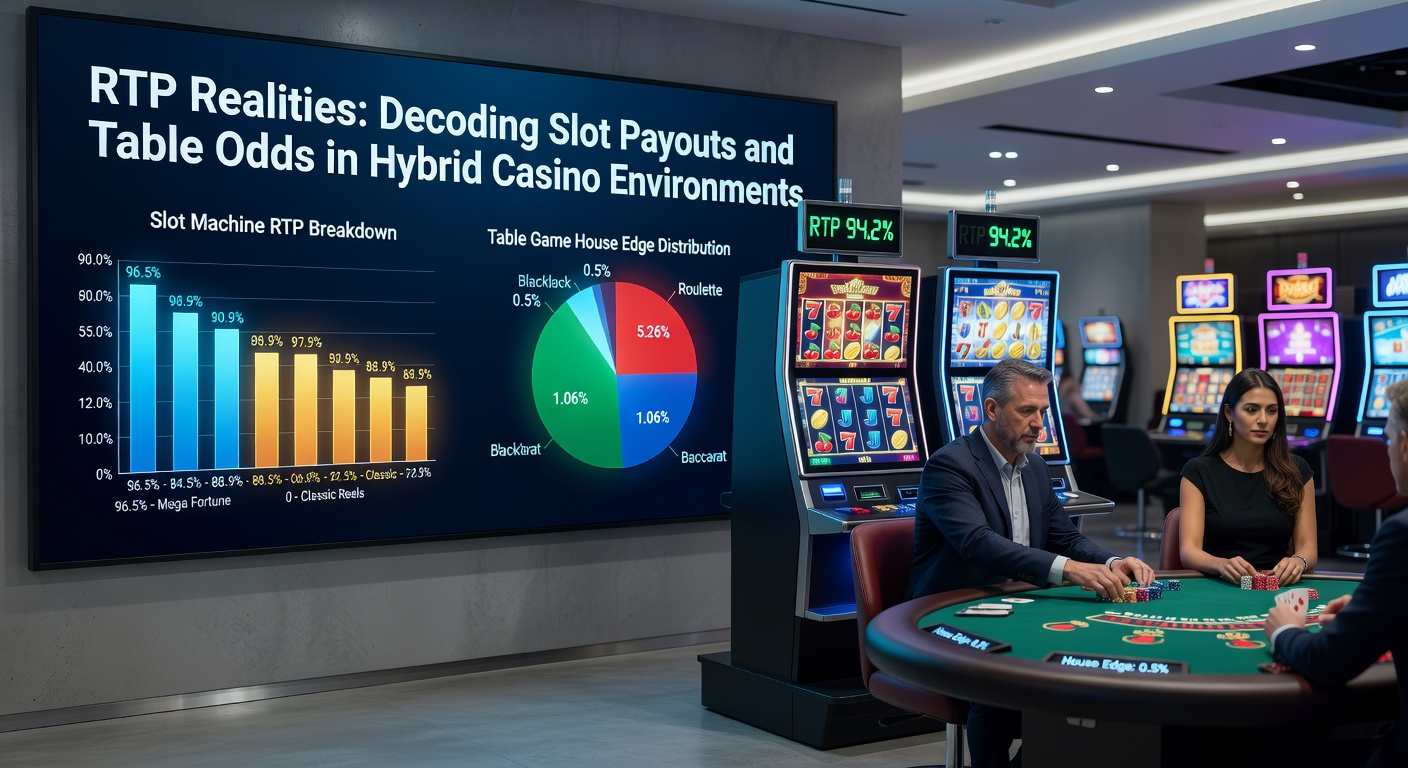
RTP Realities: Decoding Slot Payouts and Table Odds in Hybrid Casino Environments
Hybrid casino environments merge land-based floors with online platforms, creating seamless experiences where players spin slots from home while joining live dealer tables streamed from physical venues; this setup, which gained traction through tech upgrades in recent years, reshapes how return to player (RTP) percentages and table odds play out, often leading to nuanced payout structures that operators disclose under regulatory scrutiny.
Hybrid Casinos: Where Physical Meets Digital
These environments combine brick-and-mortar casinos equipped with digital integrations—think interactive slot terminals linked to online accounts—with fully virtual platforms hosting live streams from real tables; operators like those in Nevada and Ontario have expanded such hybrids since 2024, allowing players to switch between RNG-based slots and human-dealt games without leaving their seats, and data from early 2026 shows participation surging by 15% year-over-year as broadband improvements made latency negligible.
What's interesting here is how RTP and odds transparency varies; slots in hybrid setups often carry certified RTPs audited by third parties, while table games rely on provable house edges calculated over millions of hands, ensuring players grasp long-term expectations even if short-term swings dominate headlines.
Decoding RTP in Slot Machines
Return to player represents the theoretical percentage of wagered money slots return over time—say, a 96% RTP means $96 returned for every $100 bet in the long run—yet experts observe that hybrid slots frequently hit 94-98% ranges online due to lower operational costs compared to land-based machines hovering around 88-94%, according to figures from the Nevada Gaming Control Board for Q1 2026 operations.
And while volatility dictates short-term payouts—low-volatility games dish out frequent small wins, high-volatility ones chase jackpots—hybrid platforms layer on features like progressive networks linking physical and digital jackpots, boosting collective RTPs as pots grow; take one popular title where base RTP sits at 95.2%, but bonus buys push effective returns to 97% under optimal play, a mechanic regulators in multiple jurisdictions now mandate disclosing upfront.
Turns out, May 2026 data from Ontario's iGaming market reveals hybrid slots averaging 95.7% RTP across 200+ titles, up from 94.2% in land-only venues, since digital scalability cuts overhead while maintaining certified algorithms.
Slot RTP Variations Across Regions
- In U.S. states like Pennsylvania, hybrids report 92-96% RTPs, certified quarterly.
- Australian online-linked casinos cap at 92% for fairness, per state laws.
- European platforms often exceed 96%, thanks to competitive licensing.
Table Odds: House Edge Breakdown in Hybrids

Table games in hybrid environments stick to classic house edges, those built-in advantages ensuring casino profitability over volume; blackjack, for instance, offers 0.5-2% edges with basic strategy—far better than roulette's 2.7% on European wheels or 5.26% on American doubles—while baccarat hovers at 1.06-1.24% on banker bets, stats that live dealer streams from physical floors preserve identically to protect integrity.
But here's the thing: hybrid tech introduces side bets and multipliers, like blackjack insurance at 7.4% edge or baccarat pairs wagers pushing 10-15%, which operators highlight in real-time interfaces; researchers at the American Gaming Association noted in their May 2026 State of the States report that live hybrid tables saw 22% more play volume, attributing it to transparent odds displays reducing player hesitation.
Observers point out how live dealers, streamed via 4K feeds with multi-angle cams, match land-based odds precisely— no RNG variance—yet software overlays track session stats, helping players spot trends like roulette's 37-pocket European wheel favoring even-money bets at 48.65% win probability.
Hybrid Dynamics: Slots vs. Tables Head-to-Head
Slots shine in RTP flexibility, often outpacing table house edges when factoring skill-minimal play—96% RTP trumps blackjack's 0.5% only if strategy falters—while hybrids bridge gaps through blended lobbies where slot wins fund table sessions instantly; one case from a Las Vegas hybrid operator showed players averaging 3.2% higher net returns by alternating high-RTP slots (97%) with low-edge baccarat (1.06%), per internal audits shared in industry forums.
That's where the rubber meets the road: regulatory bodies demand RTP listings per game variant, house edges in fine print, and random number generator (RNG) certifications from labs like eCOGRA or iTech Labs, ensuring hybrids don't skew odds unfairly between digital and live elements; in May 2026, Malta-based platforms expanded hybrid offerings, reporting 98.1% compliance on RTP disclosures amid EU audits.
Real-World Examples from Hybrid Floors
Consider Pennsylvania's Live! Casino, where hybrid slots link to live poker rooms; data indicates 94.5% average RTP on 500+ machines, contrasting 0.8% blackjack edges during peak hours, and players who've analyzed sessions often discover that blending yields steadier variance since slots buffer table cold streaks.
Or take Australia's The Star Sydney, integrating online slots with live tables; state reports show table edges holding steady at 2.5% for craps hybrids, while RTPs climb to 96% digitally, illustrating how geography influences baselines without altering math.
Regulatory Oversight and Player Transparency
Governments enforce RTP and odds reporting rigorously—U.S. states mandate monthly filings, Canadian provinces require real-time APIs for hybrids—yet challenges persist in cross-border setups where offshore licenses clash with local rules; the reality is, players access tools like game info pop-ups revealing exact RTPs (e.g., 96.48% on Starburst hybrids) and edge calculators for tables, fostering informed bets.
Studies from gaming research centers reveal that transparent hybrids retain 18% more players long-term, as trust builds from verifiable payouts; now, with blockchain provability emerging, some platforms log every spin's RTP contribution, a trend accelerating post-May 2026 pilots in Nevada.
Factors Influencing Payouts in Hybrids
Volatility, jackpot contributions (dropping base RTP by 1-4%), and jurisdiction-specific caps shape slot realities—high-RTP games thrive online—while table odds bend slightly with rulesets, like single-deck blackjack at 0.17% edge versus six-deck at 0.64%; hybrids amplify this by offering variants galore, from infinite blackjack with 0.4% edges to speed roulette at standard 2.7%.
People often find that promo layers—like 100% deposit matches boosting effective RTP—tilt short-term math, although wagering requirements (30-50x) claw back edges; experts have observed hybrids excelling here, auto-applying bonuses across slots and tables for unified play.
Conclusion
Hybrid casino environments decode RTP and table odds through certified transparency, blending slot payouts averaging 94-98% with house edges from 0.5-5%, all while regulatory frameworks from Nevada to Ontario ensure fairness; as May 2026 figures underscore rising participation and refined disclosures, players navigate these spaces armed with data, spotting high-RTP slots for volume grinding or low-edge tables for strategic edges, ultimately where math meets the thrill of the game in one cohesive ecosystem.
Figures across regions confirm hybrids don't reinvent probabilities—they illuminate them, letting informed choices drive sessions amid the lights and deals.