Examining Transaction Efficiency Patterns That Guide Choices Between Automated Reel Formats and Interactive Dealer Experiences in Wireless Gambling Applications
Sage Schwarz · Aug 19, 2026
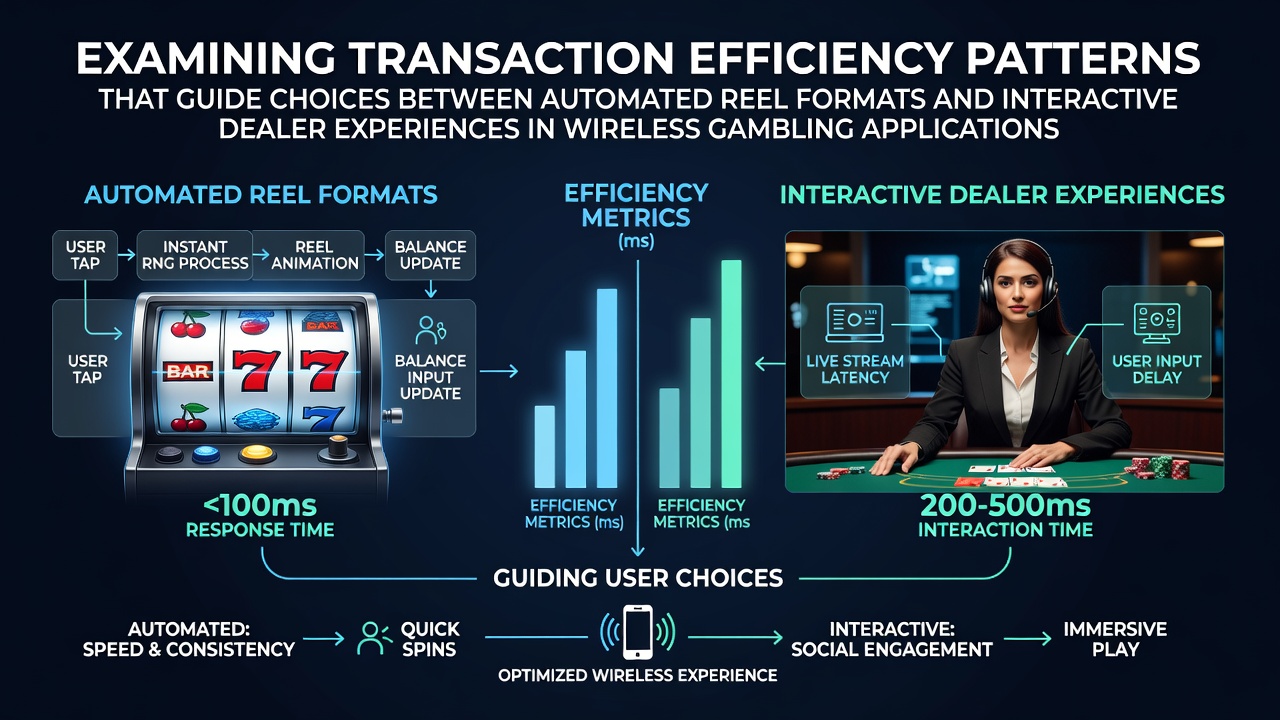
Examining Transaction Efficiency Patterns That Guide Choices Between Automated Reel Formats and Interactive Dealer Experiences in Wireless Gambling Applications
Transaction efficiency patterns in wireless gambling applications shape how players select between automated reel formats and interactive dealer experiences, with data from mobile platforms indicating that deposit and withdrawal speeds often determine session lengths and game preferences. Researchers tracking usage across North American and Asian markets have noted that automated reel formats, which require minimal ongoing interaction beyond spins, tend to pair with faster single-transaction processing while interactive dealer formats demand more fluid payment flows to maintain engagement during extended rounds.
Transaction Speed Metrics in Mobile Environments
Industry reports compiled through August 2026 reveal that average deposit confirmation times for automated reel formats average under eight seconds on optimized wireless networks, whereas interactive dealer sessions show preference for platforms where funds move in three to five seconds to support real-time betting adjustments. Observers note that these differences arise because reel-based games operate on fixed bet cycles, allowing players to complete a deposit and begin spinning without further interruptions, while dealer experiences involve continuous table dynamics that reward seamless top-ups during play.
Payment gateway analyses from the American Gaming Association highlight how cryptocurrency and e-wallet integrations reduce latency across both formats yet produce distinct retention curves; reel players return more frequently when withdrawal processing completes within an hour, whereas dealer participants show higher continuation rates when in-session transfers avoid any visible delays.
Player Behavior Patterns Across Formats
Studies of cross-border digital venues demonstrate that users facing slower transaction rails shift toward automated reels because those formats tolerate brief processing windows without disrupting core mechanics, while interactive dealer tables see drop-off when confirmation lags exceed ten seconds. Data indicates that regions with advanced 5G coverage experience narrower gaps in format preference, suggesting infrastructure quality influences how efficiency patterns guide choices.
One longitudinal review of handheld casino applications found that tiered reward structures tied to transaction volume encouraged movement between formats, with players who completed multiple deposits in a single session gravitating toward dealer experiences once initial reel activity established account balances. Figures from regulatory filings in several jurisdictions show consistent correlation between payout velocity and format loyalty, particularly when withdrawal requests for dealer winnings process through the same channels used for initial deposits.

Regional Variations in Efficiency Influence
European markets tracked by the European Gaming and Betting Association display stronger preference shifts toward interactive dealer formats when transaction security protocols maintain sub-five-second confirmations, whereas North American data points to reel formats retaining users even with marginally slower processing provided withdrawal reliability stays high. Australian regulatory summaries from the same period indicate that cross-device synchronization of payment methods reduces format-switching behavior, allowing players to remain in dealer sessions without re-authenticating funds.
Those who have examined application logs report that notification systems alerting users to completed transactions increase continuation rates across both formats, though the effect registers more strongly in dealer environments where timing affects table positioning. Patterns also emerge around minimum deposit thresholds, with lower thresholds correlating to higher experimentation between reel automation and live interaction on wireless devices.
Integration of Payment Tools and Game Access
Wireless applications that embed instant verification for e-wallets and bank transfers record elevated access to specialized dealer variants, while reel formats remain accessible even on platforms with standard verification delays. Evidence from platform analytics suggests that users who encounter friction during initial funding often default to automated reels because those experiences require fewer subsequent transactions to sustain play.
Observers tracking August 2026 trends note that loyalty integrations rewarding transaction frequency have begun to narrow the efficiency gap, enabling dealer sessions to compete more directly with reel convenience on the same applications. Regulatory bodies across multiple regions continue to monitor these patterns to ensure payment transparency does not inadvertently favor one format over the other in mobile environments.
Conclusion
Transaction efficiency patterns continue to guide format selection in wireless gambling applications through measurable differences in processing times, verification requirements, and payout reliability. Data compiled through mid-2026 shows that automated reel formats maintain broader accessibility under variable transaction conditions, while interactive dealer experiences thrive when payment flows remain uninterrupted. These observable relationships between speed and preference provide the factual basis for understanding how players navigate choices across digital platforms.