Bridging Artificial Intelligence with Player Preference Modeling to Refine Game Recommendations in Online Environments
Sage Schwarz · May 22, 2026

Bridging Artificial Intelligence with Player Preference Modeling to Refine Game Recommendations in Online Environments
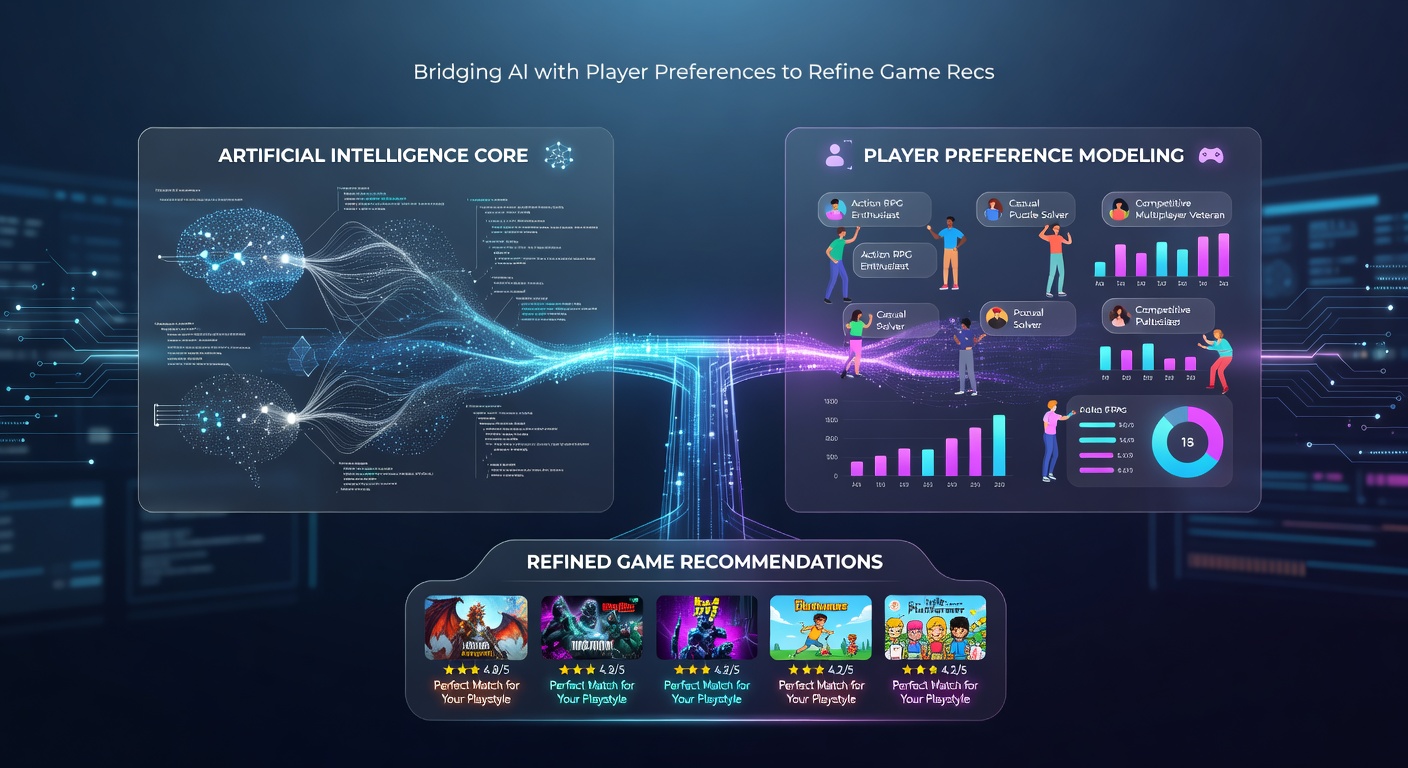
Online gaming platforms have expanded rapidly since the early 2020s, and operators now rely on artificial intelligence combined with detailed player preference modeling to deliver more precise game suggestions that match individual habits and session patterns. These systems collect behavioral signals such as time spent on specific titles, wager sizes, preferred volatility levels, and device usage times, then feed the information into machine learning models that generate ranked recommendation lists refreshed in real time.
Researchers at institutions across North America and Europe have documented how preference models incorporate both explicit choices and implicit signals, allowing platforms to adjust suggestions after each completed round or spin without requiring players to fill out lengthy surveys. The approach reduces churn by surfacing content that aligns with established play styles while introducing new titles that fit within familiar risk and reward parameters.
Data Inputs That Power Preference Models
Player preference modeling draws from multiple structured data streams that include gameplay duration, frequency of bonus feature activation, average bet adjustments during sessions, and navigation paths through lobby interfaces. Artificial intelligence algorithms process these inputs through clustering techniques that group users into dynamic segments updated daily, which means recommendations evolve as habits shift rather than remaining static across months.
Studies released in early 2026 showed that platforms integrating at least five distinct behavioral variables achieved higher retention rates compared with systems using only two or three metrics. The additional variables often cover session timing preferences, such as evening peak activity versus midday quick plays, along with device-specific patterns observed on mobile versus desktop environments.
Algorithmic Approaches in Use Today
Modern implementations combine collaborative filtering with content-based analysis and reinforcement learning loops that test recommendation accuracy against actual engagement outcomes. Collaborative filtering identifies similarities between players who share overlapping histories, whereas content-based methods examine metadata tags attached to each game, including theme, reel count, and bonus mechanics. Reinforcement components reward the model when a suggested title leads to longer play intervals or higher completion rates for tutorial sequences.
Operators in regulated markets have reported that hybrid models outperform single-method systems by noticeable margins when measured across large user bases, and these performance gains appear most clearly in environments where thousands of titles compete for attention within the same lobby.
Implementation Across Different Regions
European platforms began rolling out advanced preference engines in late 2024, and by May 2026 several major operators had expanded these systems to cover live dealer tables alongside traditional slots and video poker variants. Australian regulators have required transparency reports on algorithmic fairness since 2025, which has encouraged companies to publish high-level descriptions of how preference scores are calculated and refreshed.
North American markets, particularly in states with newly licensed online offerings, have adopted similar technology stacks while complying with varying data privacy statutes. Cross-border operators maintain separate model versions for each jurisdiction to respect local rules on player data handling and marketing limits.
Challenges and Technical Adjustments
Cold-start situations remain a persistent issue when new accounts arrive without prior history, yet platforms address this through onboarding sequences that capture initial preferences within the first three sessions. Seasonal shifts in player behavior, such as increased mobile play during travel periods, require models to include time-aware weighting that prevents outdated patterns from dominating current suggestions.
Data from industry reports issued by the Canadian Gaming Association in 2025 highlighted the importance of regular model retraining cycles, typically performed weekly, to maintain accuracy when game libraries grow or when external events influence overall engagement levels.
Future Developments Expected After May 2026
Upcoming advancements focus on multimodal inputs that combine traditional telemetry with optional voice or gesture data collected during play on supported devices. Research groups at several universities are examining how graph neural networks can map complex relationships between game features and player cohorts more efficiently than current matrix factorization methods.
Integration with responsible gaming tools is also advancing, as models begin to flag when recommended content deviates from established safe-play boundaries for individual accounts. These safeguards operate alongside core recommendation logic rather than as separate overlays.
Conclusion
Artificial intelligence paired with refined player preference modeling continues to shape how online environments present game choices, and measurable improvements in engagement metrics have been recorded across multiple jurisdictions as of mid-2026. The combination of richer data inputs, hybrid algorithms, and jurisdiction-specific compliance layers has produced recommendation systems that adapt quickly while respecting regulatory boundaries. Ongoing technical refinements are expected to further tighten the alignment between suggested content and individual session objectives.